When Israel struck Iran’s nuclear sites last year, something unexpected happened. Iranians celebrated. And Israelis started rallying online — not for their own safety, but for Iranian freedom.
Today, we are involved in a much bigger war. But believers in Israel and Iran are uniting in a different kind of fight. They both pray for a better future, yes. For freedom. But they are also praying for Jesus to reveal Himself in power and glory to both Iranians and Israelis.
Together, we want to see a revival sweep through the greater Middle East. And just like during the first Passover, together we cry in the face of the enemy: Let our people go!
Israelis and Iranians: Friends or Enemies?
It is somewhat ironic that the everyday Israelis and Iranians tend to support one another in empathy and solidarity through this war. This people-to-people connection has been gradually taking shape since early last year, when Israel and the USA preventively struck the nuclear sites in Iran.
The Persian people were celebrating, which surprised many, meanwhile the Jewish people started rallying online for their freedom. This unlikely friendship became visible to global audiences through social media. Experts in international relations note that these interactions, while informal, can have a meaningful long-term impact.
The Islamic Republic of Iran officially denies Israel’s legitimacy, frequently using rhetoric that calls for its destruction. Meanwhile, a great many Iranians wish for a peaceful future that is free from the Islamic Republic, and with that, free from their hostility toward Israel. Social media is full of messages of “thank you for seeing us,” and requests for continuous support for their freedom.
Israelis support the Iranian struggle against oppression, and show great hope for future friendship.
The Link Between Believers in Israel and Iran
This grassroots movement isn’t entirely new. For years, Israeli and Iranian citizens have engaged in quiet digital diplomacy—sending messages like “We love you” and “We stand with you” during times of crisis. Today, as tensions rise again, these voices are growing louder and more visible.
But of course, it’s important to recognize the complexities. Governments and official policies remain at odds, and real political change is slow. And one may wonder, how much deeper is this connection between believers in Israel and Iran?
On the ground, the realities of war dominate daily life of both peoples, but Israeli believers see Iranian Christians as bright stars in an otherwise dark land. In fact, Israelis see Iranians as prisoners of a regime, as hostages waiting for the right moment to rise up.
They can be likened to the Hebrews enslaved in Egypt, who have a God-given destiny to be free! That is why Israelis and Iranians supporting each other is more than a hopeful narrative—it’s a testament to the enduring power of God’s love and a testimony of great faith.
But to trace back this unique connection between the two people groups, we’d have to go back all the way to Biblical times.
Two Nations Joined in History but Separated by Wars
We know both from Biblical and other historical sources that Persia didn’t just tolerate the Jewish people. King Cyrus funded the rebuilding of the Jewish Temple. Esther saved the Jewish nation from inside a Persian palace. Daniel lived in the courts of the king and heard from heaven on Persian soil.
In the Old Testament, the region that is modern-day Iran is referred to as Elam and Persia. Historically, Elam’s exceptional archers joined Assyria in an unsuccessful attempt to conquer Jerusalem, as noted in Isaiah 22:6. The Lord later pronounced judgment upon Elam for the terror they inflicted upon the living (Ezekiel 32:24-25).
Despite past and future judgments, the Bible also holds a profound promise of hope for Iran. In Jeremiah 49:38-39, the Lord declares that He will set up His throne in Elam and restore their fortunes in the last days. This restoration is viewed as a prophetic certainty and is interpreted as a massive spiritual awakening and revival. Many believe this is actively happening today through the underground church in Iran.
So, our stories have always been woven together. But an empire in the same land that once funded the rebuilding of God’s House in Jerusalem is imprisoning the people rebuilding His church today.
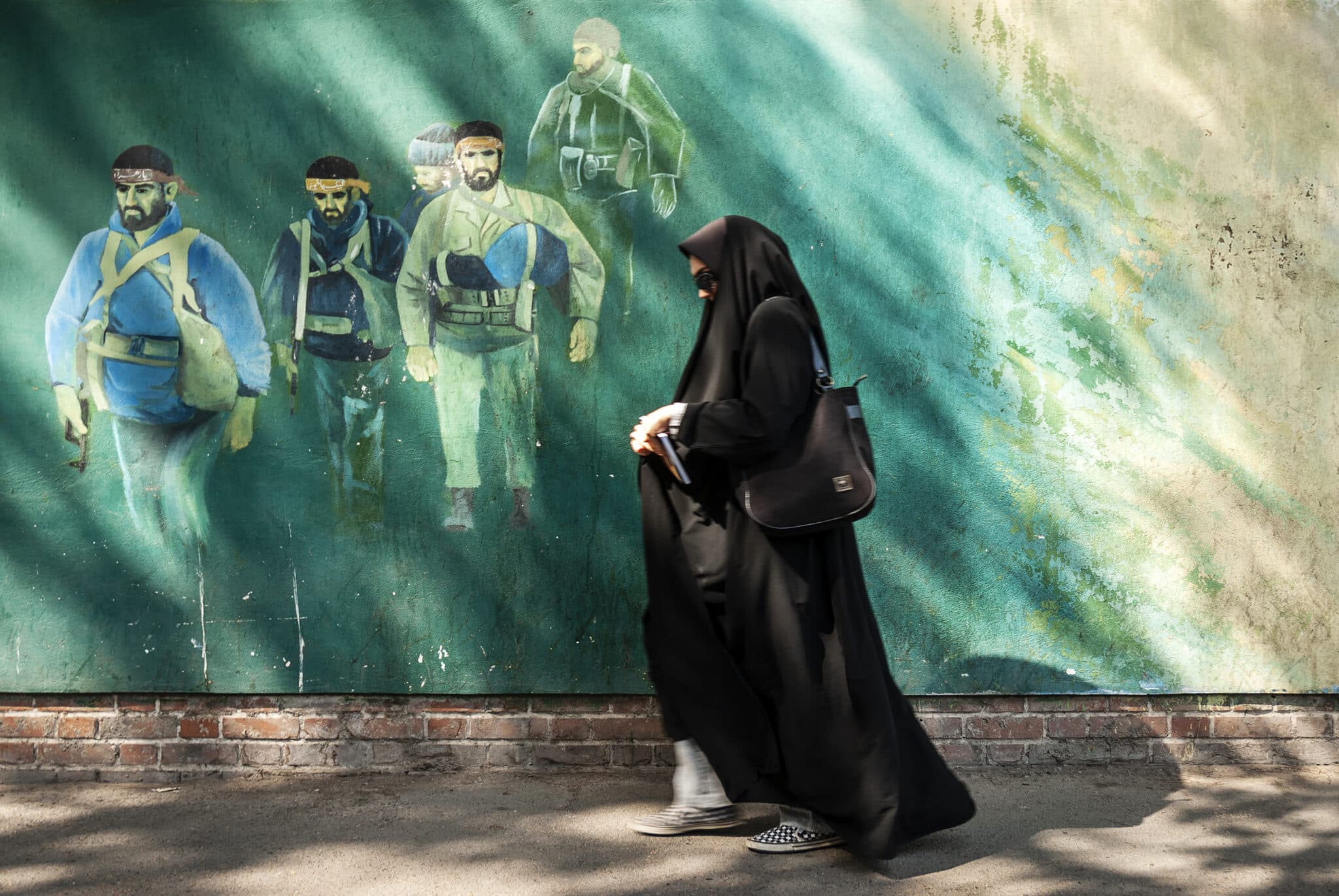
The Church in Iran
Over the past several years, Christian news outlets have been describing the underground church in Iran as one of the fastest-growing in the world. Many stories coming out of the present-day Persia sound like they were pulled straight out of the Book of Acts!
Entire families have been coming to faith through personal testimony of other believers. Some meet Jesus face to face in their dreams, and others testified to having visions of the Son of God.
For nearly fifty years, the Islamic regime in Iran has severely restricted religious and political expression, subjecting its people to harsh rule and persecution. However, instead of stifling the gospel, this persecution has actually propelled it.
Estimates from a couple years ago suggested there were over a million believers in Iran. This number is not official, as it is of course impossible to conduct any type of census. In fact, this number could have grown to a few million by now! What we do know is that there are testimonies which continue to surface, inspiring other Persians to seek the Truth.
But even in the face of brutal persecution, arrest, and possible death, Iranian believers pray for their nation’s welfare, religious freedom, and a spiritual revival. They meet in secret house gatherings or connect digitally. And they have been sharing the Gospel wherever possible.
This is the situation today. But how did we get here? Let’s take a quick look at the history of how the Gospel spread through today’s Iran.
Brief History of Christianity in Persia
When Islam emerged in the Arabian Peninsula, it rapidly spread across the Middle East. Persia was conquered between 633 and 651 AD, beginning a gradual process of Islamization. Over several centuries the Farsi people became predominantly Muslim.
Yet the land where figures like Esther and Daniel once prayed did not lose its Christian witness. Limited Catholic missionary efforts reached Persia in the 13th and 14th centuries, but a more significant wave of evangelistic missions arrived in the late 1800s and early 1900s.
Protestant missionaries established schools, hospitals, and small churches in cities such as Tehran and Rasht. These congregations operated openly, though conversion from Islam remained socially sensitive. By the mid-20th century, small house fellowships began forming among Persian converts, often connected to earlier missionary work.
From Persia to Iran to the Islamic Republic
The 1979 revolution transformed the country. The Pahlavi monarchy was overthrown and Iran became an Islamic Republic. While the constitution recognized historic ethnic Christian groups such as Armenians and Assyrians, Farsi-language services and evangelism among Muslims were restricted.
During the 1980s and 1990s, pressure on converts increased and many churches were shut down. After the execution of Rev. Hossein Soodmand for apostasy in 1990, many believers moved their gatherings underground. Secret house churches multiplied despite government crackdowns.
By the early 2000s, authorities increasingly targeted Christian leaders, but the movement continued to grow. Today much of Iranian Christianity exists through decentralized house churches led by ordinary believers, a movement that some observers believe now numbers in millions.
Sharp Escalation in Christian Persecution in Iran
Multiple reports speak of a sharp escalation in persecution of believers in 2025, which has continued into 2026. Ordinary Christian practices (prayer, communion, baptisms) are treated as crimes against the state.
Entire families lose their jobs, children are harassed at school, and even property is seized. In prison, the believers are denied healthcare and often endure more targeting and even torture.
Christians received over 280 years of prison sentences in 2025 alone. Open Doors ministry describes a “new wave of arrests targeting house churches”, where even meeting a Christian friend can be dangerous.
“I don’t have any contact with Iran right now, with my family or others… Internet is shut down,” an Iranian believer recently shared with our team member. He was able to move to a European country a while back, but most of his relatives remain in Iran.
And then, he shared with us a sobering plea: “We pray blessings for America and Israel… We pray God would use them to finish this evil spirit away from Iran (sic)… [The Islamic Regime] cannot do anything to America or Israel, so they will go back and kill the Iranian people.“
Iran is known for violating people’s rights if they do not support the Islamic Regime in the country. And so there has been a “sharp increase” in arrests after the recent period of war. There are also credible reports of Christians being killed during protest crackdowns.
And yet. Recent ministry reports during the crisis say “millions [are]… exploring Christianity” despite war and repression.
So, Who are the Iranian Believers Today?
When you think of the Iranian church and pray for Iranian believers, remember the name of Narges Nasri.
Nasri, 37, was a convert from Islam and became one of the leaders in a Farsi-speaking house church in Tehran. She has been very active in women’s Bible studies and small-group evangelism, hosting private prayer meetings and distributing Persian New Testaments.
One of her gatherings in 2024 was raided by the IRGC during security sweeps. Nasri was taken before the Tehran Revolutionary Court and charged with “propaganda against Islam” and “acting against national security”.
She was held in Evin Prison with reported sleep deprivation and isolation. Her family was barred from visits, and her husband lost his job. The Commonwealth Human Rights Initiative (CHRI) took interest in her case and engaged in advocacy for her release or at least bail considerations.
In April 2025, Branch 36 of the Tehran appeal court upheld Nasri’s prison sentence of 16 years. According to the US Commission on International Religious Freedom, Nasri had fled Iran by the time the decision was announced. Her current whereabouts are unknown.
Remember also the name of Abbas Soori.
Soori, 48, was a member of the Tehran convert network. Working in his profession, he supported multi-city Farsi fellowships via funding and coordination. That is, up until he was linked to “Zionist” seminars abroad and domestic fund transfers for church materials. Soori was also arrested in a coordinated 2024 IRGC sweep.
Sentenced to 10 years prison and 30 years social deprivation (which means no employment), Soori was detained at the Evin Prison. There, he endured beatings and forced recantations, meanwhile his family was evicted from their home. Soori managed to escape Iran while on bail, his whereabouts are unknown.
There are many more like Nasri and Soori – many men and women who have risked everything for the Gospel. Nasri and Soori were able to flee, but others remain in Iranian prisons or stay in hiding. These are the Iranians we think of during this war. These are the Iranians we want to see live free for the sake of God’s Kingdom. They are literally history makers and world changers. And they need our voice.
A Call in the Dark: Let My People Go!
As we approach Passover and Easter, we remember a people held under a government that did not fear God. The underground church in Iran is living that story right now. They cry out in the dark, as communication with the outside world has been for the most part cut off.
The Iranian cry for freedom echoes the one of the Hebrews that their descendants repeat every year at Passover: Let my people go!
That is why Israeli believers today are praying for the same Deliverer who brought Hebrews out from under Pharaoh’s oppressive hand to set their Iranian brothers and sisters free. With so much joint history, and the majority of it revolving around stories of survival and liberation, the Israeli and Iranian believers turn to God’s Word for hope.
Believers in Israel and Iran Need Me and You
Thinking of the journey to the Promised Land this Passover, we carry our Iranian brothers and sisters in our hearts. The same God who opened the Red Sea can open Iran.
Even from prison cells and hiding places, Iranian believers are not praying for survival alone. They are praying for their nation’s freedom. For a spiritual revival. For the day they can worship openly. Their faith is not waiting for deliverance, but it is already acting like deliverance is coming.
When the doors open, will the church be ready?
History shows that when political regimes fall, the church either flourishes or fractures. Much of the effect depends on whether the people and the movement were resourced beforehand. That is why we want to invest now, so that when Iran’s door opens, the church is strong enough to walk through it and reach a nation.
This Passover, stand with believers in Israel for the believers in Iran. We plead, Let our people go! This time for our Iranian brothers and sisters. But the Deliverer is the same, and we get to be part of the story.