Operation Rising Lion
Israel initiated “Operation Rising Lion” in Iran on June 13, 2025. The operation targeted over 100 Iranian sites, including nuclear facilities and military infrastructure. Although the majority of news outlets called it a surprise attack, one may wonder: was it really unexpected?
Prime Minister Benjamin Netanyahu cited intelligence indicating Iran was nearing nuclear weapon capability. This prompted the strikes to prevent a perceived existential threat, the PM’s office declared. Then added: the operation was 20 years in the making.
On June 20, the USA executed air and missile strikes on strategic Iranian military facilities, especially nuclear enrichment sites, IRGC missile depots, and air defense installations. It was not a full-scale invasion but a precision military operation, similar in design to Israel’s strategy.
While many are discussing the necessity and the timing of these attacks, there is a lot to learn about Iran’s history, its international relations, as well as Biblical and prophetic significance. All of which brought us to where we are today.
A Legacy Rooted in Ancient Persia
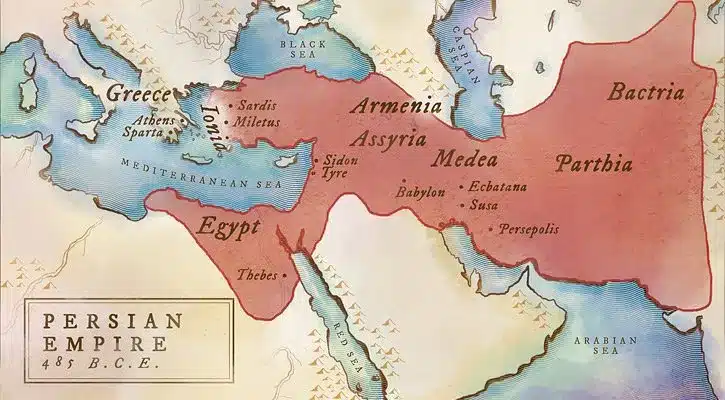
Iran, known in antiquity as Persia, holds a profound place in world history. Mentioned frequently in the Bible under the names Elam and Persia, the ancient empire played pivotal roles in Jewish history. The Persian Empire famously overthrew Babylon (Daniel 5), liberating the Jewish people after 70 years of captivity. Under divine instruction (Isaiah 44:28–45:5), King Cyrus of Persia released the exiled Jews and financed the rebuilding of Jerusalem and the Temple (Ezra 1).
Susa, the capital city of Persia, was also home to Queen Esther (Esther 2–9). The courage of this Jewish girl thwarted a genocidal plot against her people.
These deep ties established between Jews and Persians were not just historical footnotes—they created a shared heritage that continues to echo today. However, while the ancient Persian Empire championed and preserved the Jewish people, the Islamic Republic of Iran has taken a very different path.
From Monarchy to Theocracy
Fast forward to the 20th century: In 1925, Reza Shah Pahlavi, a Shia Muslim leader, rose to power in Persia, initiating a series of modernization efforts. In 1935, he officially changed the country’s name to Iran, emphasizing its Aryan—not Arab—roots.
His dynasty was short-lived, however. In 1979, his son’s rule was overthrown during the Iranian Islamic Revolution, led by Ayatollah Ruhollah Khomeini. This marked the transformation of Iran into a theocratic state, governed by Islamic clerics and dominated by a radical interpretation of Shia Islam.
Ayatollah Ali Khamenei has been Iran’s Supreme Leader since 1989. While Iran has a president who manages day-to-day governance, Khamenei holds ultimate authority over both political and religious affairs. Under his leadership, Iran has promoted a revolutionary ideology that includes global Islamic domination and the destruction of Israel, which it calls “the little Satan,” and the United States, “the great Satan.”
The People vs. The Regime
Khamenei’s worldview is shaped by the events of the 1979 revolution, which sought to expel Western influence and establish a theocratic Islamic state. He sees Iran’s role as the vanguard of the global Islamic revolution—an ideology in stark contrast with Western democratic values.
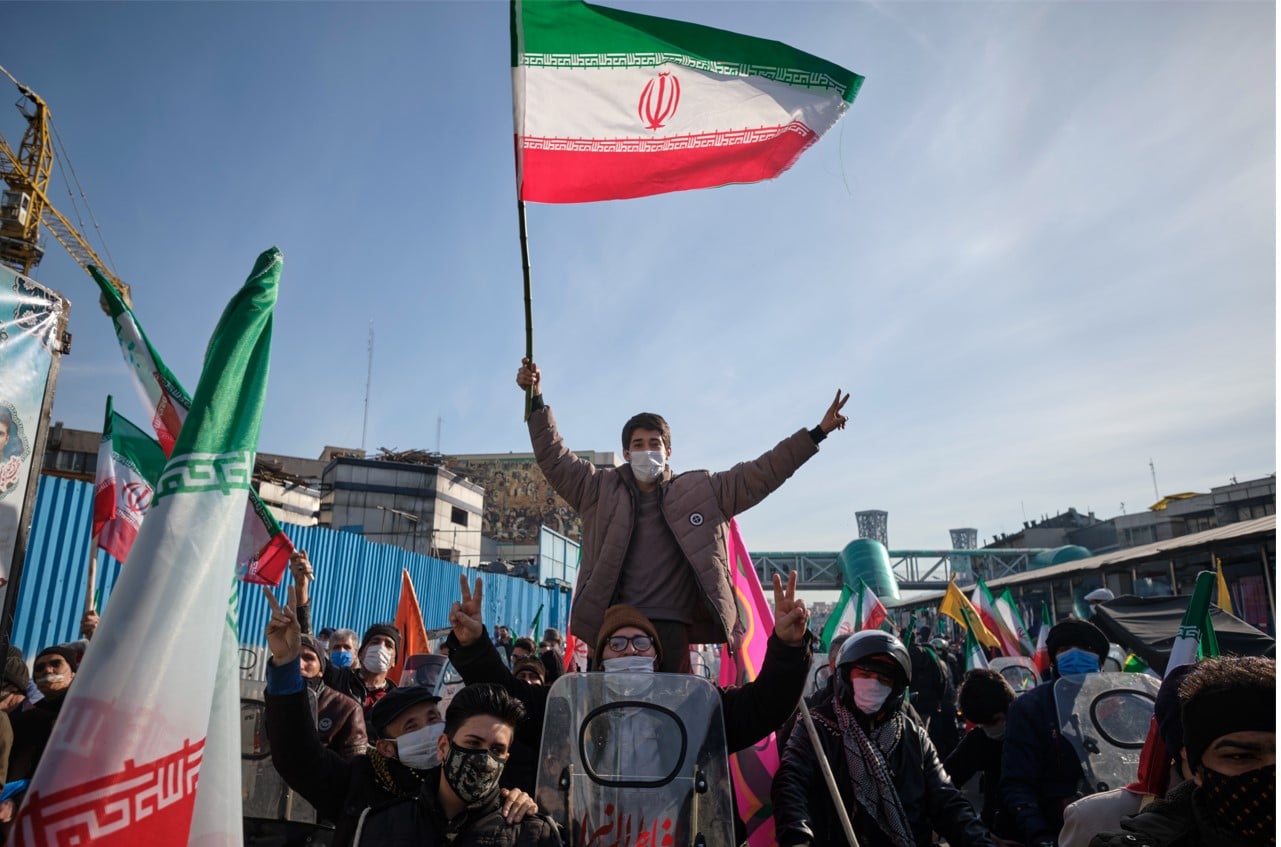
Despite the regime’s militancy, most Iranians do not support their current government. Generations of economic hardship, repression, and lack of freedom have fueled widespread discontent. Many Iranians, particularly the youth, yearn for democracy, religious tolerance, and even alignment with Israel and the West.
Protests have repeatedly emerged, only to be brutally suppressed by government forces. Reza Pahlavi, the exiled crown prince and grandson of Reza Shah, continues to represent a vision of a secular, democratic Iran—an Iran that many still long for.
Iran’s Network of Proxy Terrorism
Designated a state sponsor of terrorism by the U.S. in 1984, Iran has utilized the Islamic Revolutionary Guard Corps (IRGC) to further its militant agenda. The IRGC operates directly and through a network of proxy groups including Hezbollah, Hamas, and the Houthis.
While Iran and these groups don’t all share the same Islamic sect—Hamas is Sunni, while Iran, Hezbollah, and the Houthis are Shia—they are united by a common enemy: Israel. As the old saying goes, “The enemy of my enemy is my friend.” Iran equips these proxies with money, weapons, and intelligence, while the groups offer bloodshed through jihad.
This dangerous alliance was evident in the October 7 massacre carried out by Hamas against Israel and the simultaneous attacks launched by Hezbollah on Israel’s northern border—both linked back to Iran.
The Path to Operation Rising Lion
Iran’s nuclear ambitions date back to the 1950s and were initially supported by the U.S. However, the 1979 revolution marked a shift toward military nuclear aspirations. While Iran insists its program is peaceful, its rhetoric suggests otherwise, frequently threatening Israel and the U.S.
In 2012, Israeli Prime Minister Benjamin Netanyahu publicly drew a “red line,” warning the world that Israel would act if Iran came within weeks or months of acquiring enough enriched uranium for a nuclear bomb.
This red line was not just rhetoric. It was a clear public commitment that Israel would take military action if Iran approached nuclear breakout capacity.
In April 2025, intelligence confirmed that Iran had crossed that red line. On May 31, 2025, the IAEA confirmed Iran’s noncompliance. Still, even after ignoring a 60-day warning from former President Donald Trump to reinstate nuclear restrictions, Iran continued its enrichment activities.
Finally, on June 13—which was day 61 since President Trump’s warning—Israel launched a series of strikes to eliminate Iran’s nuclear threat. The launch of Operation Rising Lion was the fulfillment of Netanyahu’s red line policy: a final warning followed by decisive military action.
Why the Name “Operation Rising Lion”?
Israel’s strike on Iran—dubbed Operation Rising Lion—derives its name from powerful Biblical and symbolic roots. In Hebrew, “Rising Lion” recalls a verse from the Book of Numbers:
“Behold, the people shall rise up as a great lion, and lift up himself as a young lion.” (Num. 23:24)
The name evokes Israel’s image as a strong, determined force. But the imagery also echoes the former emblem of Iran—a lion standing before a rising sun—which appeared on pre‑1979 Iranian flags. This dual imagery serves as a pointed message targeted at the Iranian leadership and population.
The symbolic name of the operation also points to its mission: to disrupt Iran’s nuclear ambitions while rallying domestic and international support. Thus, while the name is clearly scriptural, it also resonated with Iranian national imagery and psyche.
Israel’s Precision Strikes and Iran’s Retaliation
Israel’s mission was clear: prevent Iran from acquiring a nuclear weapon and eliminate its ability to wage long-range warfare. Precision strikes have targeted nuclear facilities, missile production sites, and key military installations. Israel has also eliminated leading scientists and IRGC generals who posed a future threat to rebuilding these programs.
Cyberwarfare, notably by a group called “Predatory Sparrow” connected to Israeli intelligence, has disrupted Iran’s digital infrastructure, specifically targeting systems that fund IRGC operations. Despite its aggression, Israel has maintained a policy of warning civilians before launching attacks.
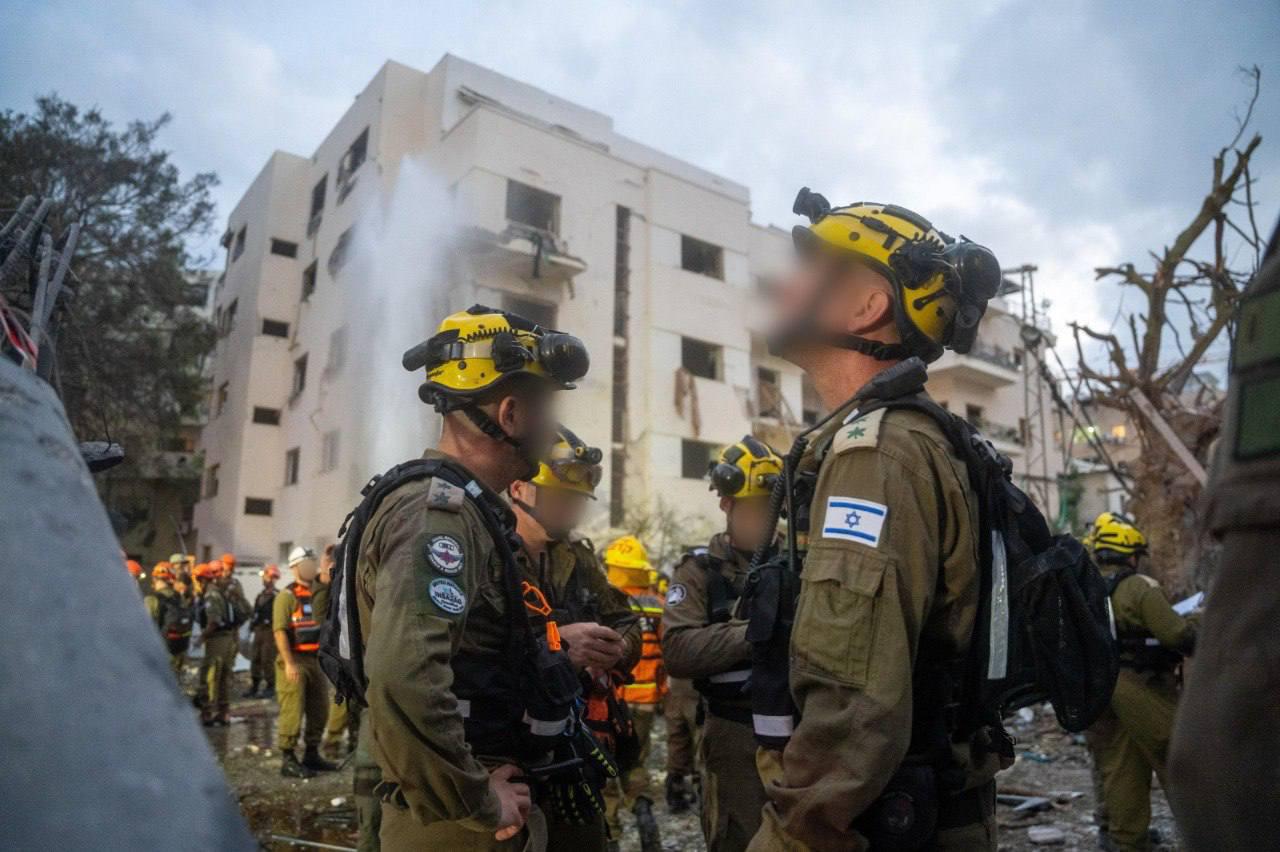
Iran responded to Israel’s actions by launching hundreds of drones and ballistic missiles aimed at civilian centers like Tel Aviv and Haifa. While Israel’s multi-layered air defense system—comprising Iron Dome, David’s Sling, Arrow 2 and 3, Iron Beam, and Barak Magen—has intercepted 85–90% of incoming threats, some missiles still manage to breach the defense due to sheer volume.
These attacks have caused civilian deaths and significant property damage, further escalating the crisis. Will the ceasefire, announced on June 24, hold? Time will tell.
Why the USA Decided to Strike Iran
While Israel is Iran’s immediate target, the regime’s rhetoric makes clear that the U.S. is also in its crosshairs. The phrase “first the Saturday people, then the Sunday people” symbolizes the threat to both Jews and Christians. Iran’s apocalyptic Shia theology anticipates global Islamic rule, ushered in by the appearance of the Mahdi, their messianic figure.
That is why on June 20, the USA executed air and missile strikes on strategic Iranian military facilities.
The U.S. attack on Iran, though less publicized than Israel’s initial strike, marks a major military operation with the potential to reshape the Middle East. It was deliberate, coordinated, and based on confirmed intelligence.
Everything seems to point to the fact that the operation helped avoid a ground invasion. The consequences are still unfolding, especially since Iran attacked a U.S. military base. Nevertheless, it appears that both sides agreed to a ceasefire.
Israel, Iran and the Future of the Middle East
The history of Persia is filled with divine interventions that shaped Jewish destiny. Queen Esther’s story is a testament to God’s faithfulness in the face of attempted genocide. The holiday of Purim was established to commemorate this victory, and it was first celebrated in Susa, which lies in modern-day Iran.
Iran stands today as a nation torn between its ancient legacy and modern ideology. From being a biblical ally of the Jewish people to its current position as Israel’s most formidable enemy, the contrast is stark. Yet history is not finished. As the region braces for what may come next, the prayer of many is that truth, freedom, and peace will prevail.

God’s Perfect Plan – From Israel to You: Free PDF Download
The Bible is full of God’s promises that can encourage our faith. Together, these promises make up one master plan of God.
You’re about to discover God’s perfect plan through the lens of 25+ references throughout Scripture.
Articles Related to Operation Rising Lion: Israel and Iran at War
Estimated reading time: 9 minutes