What is Shavuot?
Shavuot is a major Jewish holiday that celebrates the giving of the Torah at Mount Sinai and the Feast of Weeks described in the Bible. Shavuot occurs 50 days after Passover and has both agricultural and spiritual significance in Judaism. For Christians, Shavuot is connected to Pentecost, when the Holy Spirit was poured out in Acts 2.
It is worth noting that Shavuot is one of the three pilgrimage festivals described in the Bible, along with Passover (Pesach) and Sukkot. It is one of the eight appointed times of the Lord described in Leviticus 23. The Feast of Shavuot typically falls in late May or early June on the Gregorian calendar.
What Does Shavuot Celebrate?
Shavuot takes us back to Mount Sinai. There, God revealed Himself to the entire nation of Israel (through Moses) and gave them the Torah. Torah is what we could call the first five books of the Bible. The Torah is the foundation of Jewish law and teaching.
Early on, the Feast of Weeks celebrated the end of the barley harvest and the beginning of the wheat harvest. It included the bringing of the first fruits to the temple in Jerusalem as offerings to God.
Shavuot is not as well-known as the two other temple pilgrimage holy days, Sukkot and Passover. Passover has a seder dinner with special food and a dramatic retelling of the Exodus account. Sukkot has memorable sukkahs, tabernacles and daily prayer with the lulav and etrog (plant species that are used ceremonially).
Shavuot does not have a single highly recognizable observance. It is more subtle among the pilgrimage holy days described in the Torah. Yet, God still distinguished it as being part of the “Top 3” holidays in the Bible. Why is that? We’ll get to that a little later.
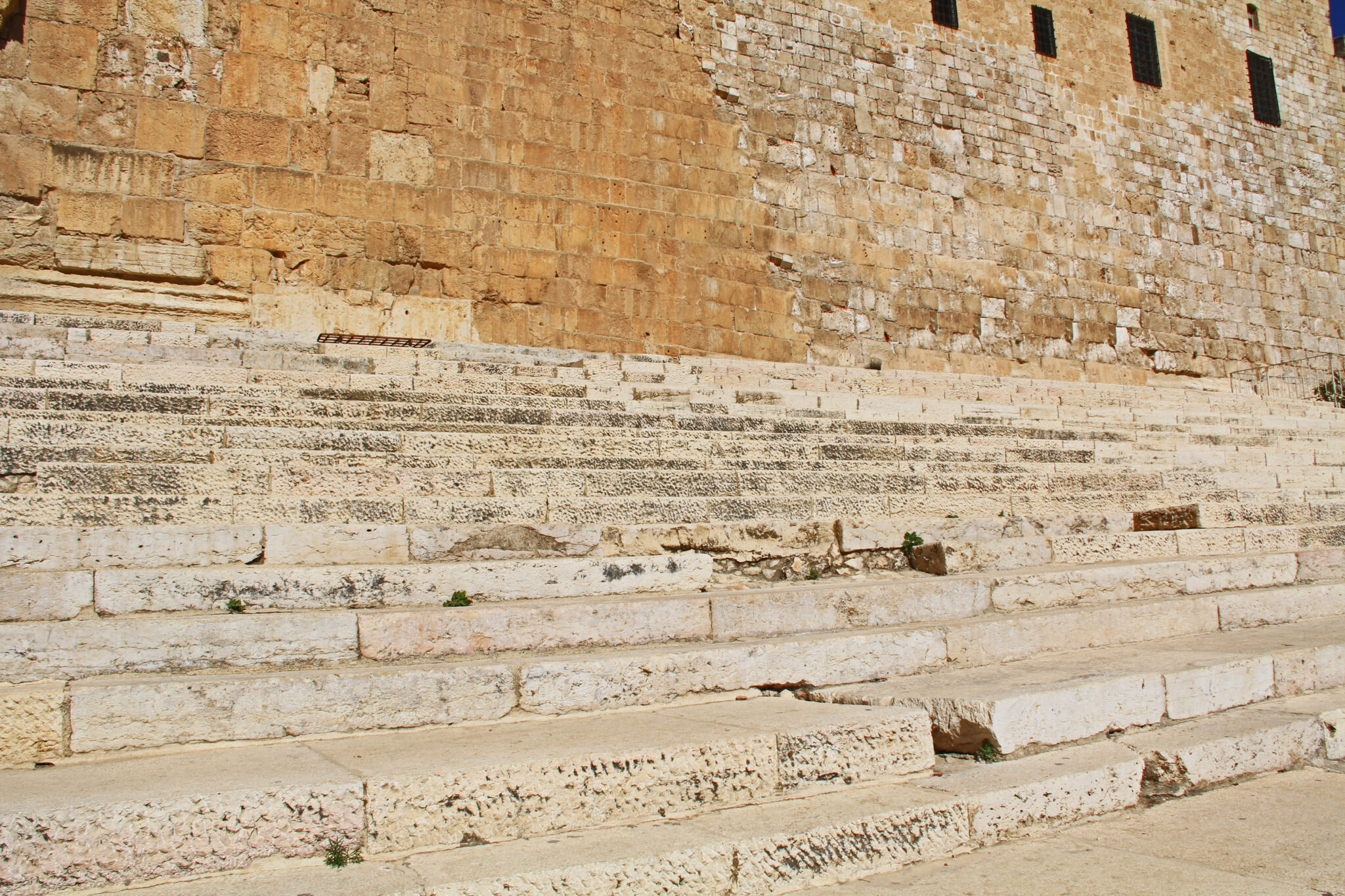
Feast of Weeks in the Bible
The holiday appears often in the Torah. To learn more, check out Exodus 23:16-17, Exodus 34:22, Leviticus 23:15-16, Numbers 28:26, and Deuteronomy 16:10.
But it’s Leviticus 23:15-22 that has one of the more descriptive accounts of the holy day:
You shall also count for yourselves from the day after the sabbath, from the day when you brought in the sheaf of the wave offering; there shall be seven complete sabbaths. You shall count fifty days to the day after the seventh sabbath; then you shall present a new grain offering to the LORD. You shall bring in from your dwelling places two loaves of bread for a wave offering, made of two-tenths of an ephah; they shall be of a fine flour, baked with leaven as first fruits to the LORD. Along with the bread you shall present seven one year old male lambs without defect, and a bull of the herd and two rams; they are to be a burnt offering to the LORD, with their grain offering and their drink offerings, an offering by fire of a soothing aroma to the LORD. You shall also offer one male goat for a sin offering and two male lambs one year old for a sacrifice of peace offerings. The priest shall then wave them with the bread of the first fruits for a wave offering with two lambs before the LORD; they are to be holy to the LORD for the priest. On this same day you shall make a proclamation as well; you are to have a holy convocation. You shall do no laborious work. It is to be a perpetual statute in all your dwelling places throughout your generations. (NASB)
How Is Shavuot Celebrated Today?
One of the unique customs of the Feast of Weeks is reading through the Book of Ruth. It is not entirely clear why the rabbis chose to connect this book with Shavuot. Some of the reasons could be the fact that the story is set during the harvest season and contains themes of loyalty, kindness, and the acceptance of the Torah.
Another tradition for many observant Jews in Israel today is to spend the eve of Shavuot on an all-night Torah study. This custom is known as Tikkun Leil Shavuot and is rooted in the idea of preparing to receive the Torah anew.
And here’s a tradition that is well loved by both religious and non-religious Jews: Shavuot is a time to eat dairy foods! This time of year, cheesecake and cheese-filled pastries are available on every corner in Jerusalem and beyond.
There are various explanations for this tradition, but no one can say for sure how or when it started. One idea is that the Torah is compared to milk and honey, symbolizing its sweetness and nourishment.
Finally, the Jewish people tend to decorate their homes or places of worship with greenery and foliage. The Midrashic tale says that Sinai bloomed with vegetation when the Torah was received on the mountain, so Israelis love to bring that feel into their dwellings.
Transform lives in Israel through Gospel-centered ministries.
FIRM is your trusted partner for Gospel impact in Israel.
Reading the Book of Ruth
As mentioned earlier, the book of Ruth is customarily read during Shavuot, as the events take place in the beginning of the barley harvest (Ruth 1:21), before Shavuot. Many of us are familiar with Ruth’s story as one of the Bible’s most beautiful love stories. It is also one that recalls the provision of the Lord after hardship, labor and waiting, with wealth, fortune, love and family. Who doesn’t love a happy ending?
However, think about the beginning of Ruth and Naomi’s story, before Boaz. The very first verses tell us that there was a famine so dire that Naomi’s husband, Elimelech left his native land to go to Moab to seek better fortune.
Moab was enemy territory, so you can imagine how desperate those times were. As the saying goes, desperate times call for desperate measures. Elimelech and Naomi had two sons, named Mahlon and Chillionwhose names roughly translate from Hebrew as “Poor” and “Sickly”. And true to their namesakes, “Poor” and “Sickly” died and left their wives widows.
The Difficult Walk Back Home
As you likely remember, Naomi returns to Judah with Ruth, who refuses to leave her side. Their return was widely talked about: could this be Naomi who left with her husband to seek better luck in enemy territory?
If you have ever had to return to your hometown because of circumstances and not of your choosing, you can likely relate to how Naomi was feeling. She felt defeated. Both Naomi and Ruth would have faced raised eyebrows, probing questions, little comments and a lot of gossip. All Naomi and Ruth have is one another, their faith in the Lord, and their will to survive.
So, Naomi answers her neighbors,
“She said to them, “Do not call me Naomi; call me Mara, for the Almighty has dealt very bitterly with me. I went out full, but the LORD has brought me back empty. Why do you call me Naomi, since the LORD has witnessed against me and the Almighty has afflicted me?”
This was not how Naomi (or Ruth) ever imagined “homecoming”. As far as they could tell, it was game over.
From Ruth and Naomi All the Way to Emmaus
There’s an interesting parallel we can draw here with another “homecoming” that did not feel victorious or happy. In the story of the Road to Emmaus, we see Cleopas have similar feelings of disappointment. “How could the Messiah, or the one we had thought to be the Messiah, die?” This wasn’t the plan. The plan was for the Messiah Jesus to conquer the Romans and re-establish the Davidic throne.
Cleopas did not know that in his journey filled with disappointment and doubt, Jesus was walking right next to him. Jesus still did not reveal his identity just yet, but spoke to him plainly, recalling the scriptures and the words of the prophets.
Eventually, after revealing Himself to Cleopas, Jesus ascended into heaven. Luke’s gospel says that “After worshiping Him, they returned to Jerusalem with great joy. And they were continually in the temple, praising God.”
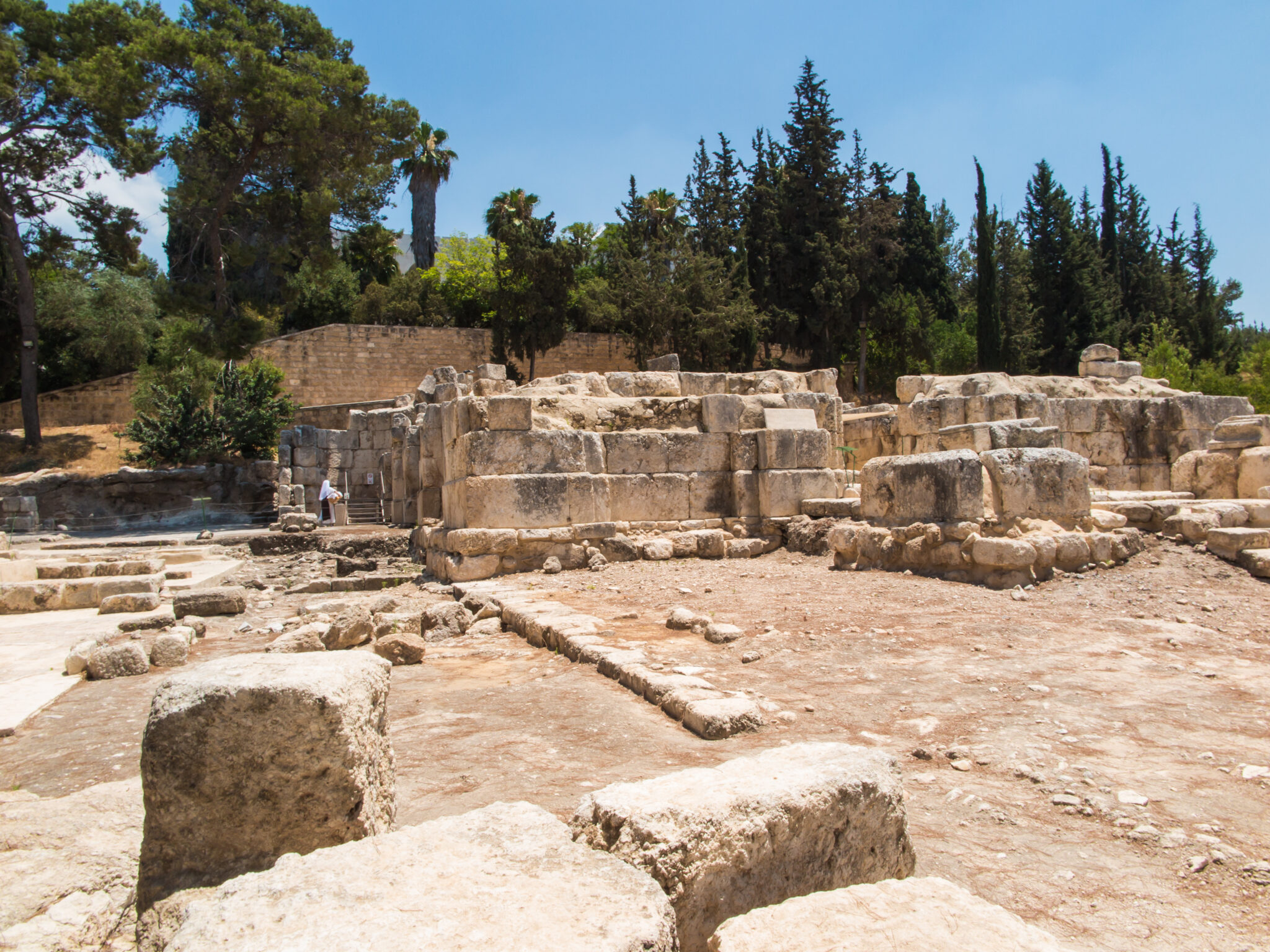
The “Emmaus Ending” for Ruth and Naomi
Just like with Cleopas, God did not intend to leave Naomi and Ruth in their puddle of tears. He walked home with them, knowing that better days are still ahead. God did not want them to stay in a foreign land, because He had a wonderful consolation waiting for them.
Ruth met Boaz, who then took both women in and provided for their future. Ruth birthed children and led the family life she always dreamed of. She clung to Naomi, because she wanted a place of belonging. God fulfilled that desire and gave her more than she asked for.
In many ways, that is exactly the story of Shavuot, and later, Pentecost. The weary Hebrews walked through the desert longing for God’s presence. So the God of Abraham, Isaac and Jacob gave them His very Word – His Law which David described as sweeter than honey. Centuries later, the weary disciples stayed in Jerusalem longing again for God’s presence. So the God of Israel gave them His Spirit – the ultimate Comforter.
What Is the Connection Between Shavuot and Pentecost?
If you are wondering what the connection between Shavuot and Pentecost is, you can learn a lot more here. In short, the events of Acts 1 and 2 take place at Shavuot, when Jews made pilgrimage to Jerusalem to worship and give offerings. Though considered a Christian holiday today, Pentecost is actually Shavuot’s Greek name.
Pentecost is the Greek word for 50. It applies to Shavuot, because it is the culmination of the 50 days of Counting the Omer. The counting begins immediately after Passover and the Feast of Unleavened Bread.
And this is where the disciples are: 50 days after Jesus’ crucifixion and resurrection, 10 days after His ascension to Heaven. In anticipation of Shavuot, Jerusalem was full of pilgrims and the disciples were already gathered. (Acts 2:1)
That day, the Spirit was poured out on those gathered, and they were all amazed because they heard one another in their native tongue. Peter, who once denied Jesus, spoke boldly to the crowd, preaching the gospel to the multitude. Just like with Ruth and Naomi, the disciples’ waiting was over, but their story was just beginning.
How Can Christians Observe Shavuot?
As a Christian, you already know about Pentecost. Perhaps your church community dedicates a special service to Acts 1 and 2, you hear teachings on the Holy Spirit, maybe there’s even an emphasis on evangelism and missions. These are all wonderful and should continue!
But you may wonder how you can connect this special season with Shavuot, the feast that God told people to observe. You can start with simple steps really: study the Bible passages on Shavuot, read the Book of Ruth, eat some cheesecake and decorate your home.
But I encourage you to take things deeper. Add to the story of Ruth, and read the Gospel passage about the road to Emmaus. Ask the Lord difficult questions and to increase your faith in God’s timing. If your circumstances are difficult and not at all what you expected, Shavuot and Pentecost is for you.
When Jesus spoke with Cleopas, Cleopas did not recognize the Lord. He did not realize that it was the Lord who was walking with Him all along, listening to his disappointment and confusion. Ruth and Naomi could not imagine how the Lord would make good out of their suffering and desolation. Even so, they moved forward in faith without knowing what was next.

What Is the Spiritual Meaning of Shavuot Today?
As we all know, most of what happens to us in life we could never plan or expect. Sometimes we have good surprises— health and wellness, growing families, maybe even career and personal growth, financial success. But other times…well, the surprises we face leave us like Ruth and Naomi, wondering how did we ever get here. We ask God, how could this possibly be a part of Your plan?
Fortunately, the Lord doesn’t require us to put on a brave face and act like we are content with suffering and hardship. Naomi cries aloud with her voice that she is desolate and bitter, Cleopas expresses his gloom and confusion. The Psalmist cries out his suffering and affliction repeatedly in scripture. The Lord always welcomes our honest prayers and feelings, and He is always right there with us.
As you celebrate Shavuot and Pentecost, be encouraged that your voice is heard. Move forward in faith, not by sight. God has given us His word to guide us by day and night. And He has given us His Holy Spirit to counsel us every step of the way.
A Simple Guide Through the Biblical Holidays: Free PDF Download
You may know them as the “Jewish holidays,” but did you know the Bible calls them “Feasts of the LORD”?
We’ve put this guide together for you so that you have all you need to know about these holidays that God calls His own.
Articles Related to What is Shavuot? Discovering this Jewish Holiday
Estimated reading time: 12 minutes