The Voice of Iran’s Underground Church the War Cannot Silence
“We love Israel” – she wasn’t supposed to say it.
Not because it isn’t true, but because where she comes from, saying it out loud used to be dangerous. Elaheh grew up in Iran, in a deeply religious Muslim family, shaped by a regime that has spent fifty years teaching its people that Israel is the enemy. She believed it. She didn’t know anything different.
That was before she read the Old Testament.
“I had to repent,” she told me quietly, during a recent conversation from her home in Scotland. “I believed what the government said. But as I read, I understood: Israel is the nation of God. God loves them. But it was not what the government told us.”
Then she said something that stopped me mid-conversation.
“Iranian people love Israel. It’s not like what the government says. People love Israel. We love you.”
She said it in a way you say something you’ve known your whole life – simply, without performance, the way truth sounds when it finally finds the right words.
I’ve lived in Israel long enough to know that this feeling runs both ways. When Israel struck Iran’s nuclear sites, something unexpected happened on social media: Iranians celebrated, and Israelis started rallying online not for their own safety, but for Iranian freedom. “Thank you for seeing us.” “We love you.” “We want the same thing you want.” For anyone watching the news, it looked like an anomaly. For anyone who knew the deeper story, the biblical one, the human one, it made complete sense.
Elaheh is part of that deeper story. And she helped me understand it in a way I hadn’t before.
The story the regime couldn’t erase
To understand why an Iranian woman says “we love Israel” in the middle of a war, you have to go back further than the current headlines.
Long before the Islamic Republic existed, Iran and Israel shared a story written by the same God.
King Cyrus of Persia, the ruler Isaiah called God’s “anointed,” the only Gentile in all of Scripture given that title, didn’t just tolerate the Jewish exiles. He funded the rebuilding of the Temple. He issued the decree that ended the Babylonian captivity. A Jewish orphan named Esther became queen in the Persian court and saved her people from genocide. Daniel heard from God on Persian soil. Ezekiel walked among exiles in Persia.
The soil of ancient Iran bears the imprint of Israel’s story. That is not a religious talking point. It is simply history.
The Islamic regime has spent fifty years trying to erase that history from its people’s memory. What it has not been able to do is make it untrue.
Elaheh grew up not knowing any of it. Like most Iranians shaped by the regime’s education, she had absorbed its antisemitism without questioning it. But then she began reading Scripture, and the floor shifted under her. “I asked God to forgive me. I didn’t know.” She paused. “I’m sure lots of Iranians still don’t know. But believers, they know.”
How Elaheh Joined Iran’s Underground Church
Elaheh came to faith ten years ago, in 2016. She was an English teacher in Tehran when one of her students, someone she didn’t know well, came to her one day and said: “We have been praying for you for seven months. Our underground church has been praying for you. And God said it was time.”
She handed Elaheh a New Testament in Persian. “Jesus loves you,” she said.
Elaheh’s first response was honest. “I thought Jesus was for Westerners.” The young woman looked at her and said: “My parents are Muslim too. Jesus is for everyone.”
The risk that student took is difficult to overstate. In Iran, inviting someone to an underground church is not a minor act of courage. It is the kind of decision that can end with prison sentences, lost jobs, and families destroyed. It takes one wrong guest, one informer, one person not deserving of trust, and the entire group disappears. Elaheh could have reported her to the police. She told me so herself, almost matter-of-factly. “I could have just reported them. One call. That’s it.” But she didn’t. She decided to go to their meeting.
That first night at a small home gathering, with people who knew each other completely because they had to, the Holy Spirit moved. Elaheh started to cry. She went home and hid her New Testament between the clothes in her drawer so her parents wouldn’t find it. She read it in secret. And she fell in love.
Eventually she brought her boyfriend. “I first came because of you,” he told her later. “But then God worked.” They left Iran together in 2018, after the preacher in their church was arrested and the others scattered. Since then, they have been building something new in Scotland. This year, God gave their ministry a specific call: pray for Israel. Welcome Israelis. Build the bridge the war is trying to destroy.
What God said about Iran centuries ago
There is a passage in Jeremiah 49 that most Bible readers skip over. It sits amid a series of hard prophetic words against surrounding nations. Near the end, God turns to Elam, the ancient name for southwestern Iran, and says something remarkable:
“In the last days I will restore the fortunes of Elam, declares the Lord.” (Jeremiah 49:39)
In the last days. The fortunes restored.
Set that promise against what is actually happening on the ground in Iran right now. In 1979, when the Islamic Revolution came to power and tried to close the door on the gospel, there were fewer than 500 Persian-background believers in the entire country. The regime banned Farsi worship services. It shut down churches and executed pastors. It did everything a government can do to make faith disappear.
Instead, the church went underground and exploded.
Today, estimates from Open Doors and mission organizations place the number of Iranian believers at between one and five million. Stories emerging from Iran read like the Book of Acts: entire families are coming to faith through a neighbor’s testimony, people are encountering Jesus in dreams, new groups form faster than the authorities can track them. The church is not growing because conditions are favorable. It is growing because God made a promise to Elam, and He keeps His word.
The Cost of Being in Iran’s Underground Church
None of this comes cheaply.
In 2025 alone, 254 Christians were arrested across Iran. Combined prison sentences exceeded 280 years. The charges are nearly always the same: “propaganda against Islam,” “acting against national security,” and increasingly since the current conflict began: “Zionist Christianity,” “trained element,” “Mossad links.”
Hosting a Bible study in your living room is now framed as espionage.
Narges Nasri was 37 years old when IRGC agents raided her home gathering in Tehran. She had been leading women’s Bible studies, hosting prayer meetings, distributing Persian New Testaments. Branch 36 of Tehran’s appeal court sentenced her to 16 years in Evin Prison. She reportedly endured sleep deprivation and isolation. Her family was barred from visits. Her husband lost his job. She has since fled Iran; her whereabouts are unknown.
Abbas Soori, 48, organized support across multiple underground fellowships, funding, logistics, and connection between house churches in different cities. He was arrested in a coordinated IRGC sweep and sentenced to 10 years in prison and 30 years of social deprivation, meaning no employment, no normal life, even after release. He endured beatings and forced recantations in Evin. His family was evicted from their home. He also eventually fled. His whereabouts are unknown.
There are many like Narges and Abbas still inside Iran.
An Iranian believer who managed to reach Europe recently shared this with our team: “We pray blessings for America and Israel. We pray God would use them to finish this evil spirit away [sic] from Iran. The Islamic Regime cannot do anything to America or Israel, so they will go back and kill the Iranian people.”
That is not a political statement. That is a man praying for his people from the outside, watching the door close behind him.
The Unexpected Growth
Elaheh told me something that has stayed with me. During the current conflict, internet access across Iran has been cut. The online discipleship schools, prayer platforms, and worship streams that connected isolated new believers to the broader body are all gone. She herself cannot reach her family properly. They call when they can: “We are alive. We are alive.” Then the line goes quiet again.
And yet the church is still growing.
“Believers are using this situation to get close to people who are in pain,” she told me. “People’s loved ones are arrested or killed. They don’t know where their family members are. So the believers go to them. This is a good opportunity.”
A crisis should silence a fragile underground movement. Instead, the blackout that cut off digital discipleship sent believers back to their neighbors, and the neighbors are coming to faith. Recent ministry reports during the conflict describe millions of Iranians actively exploring Christianity despite the war and repression.
This is what the regime has never understood and cannot stop. It is arresting the church it can see. But the one it cannot see keeps growing.
What Believers in Israel are Saying
I edited a video not long ago of Israelis speaking directly to the Iranian people, through the war, across the distance. The message was simple: we love you. We see you. We want you to be free.
Elaheh saw it. “That was lovely,” she said. And she meant it the way you do when the right words finally fall into place.
Here in Israel, that sentiment is not rare. Some of our people have said publicly: if staying in bomb shelters a little longer means the Iranian people can be free from this regime, it is worth it. That is not strategic thinking. That is the logic of people who believe that Iranian freedom is not a military objective but God’s purpose. And of people who know from deep within their own history what it looks like when God decides to deliver a people.
The same God who made a promise to Elam is keeping it. The question He is asking the rest of us is whether we will be part of it when He does.
The Underground Church in Iran is Not Waiting to Be Rescued
Iran’s underground church is already spreading, already paying the price, already making disciples in the dark. But history is clear: when political regimes fall, the church either flourishes or fractures, and the difference is almost always in whether it was resourced and connected beforehand.
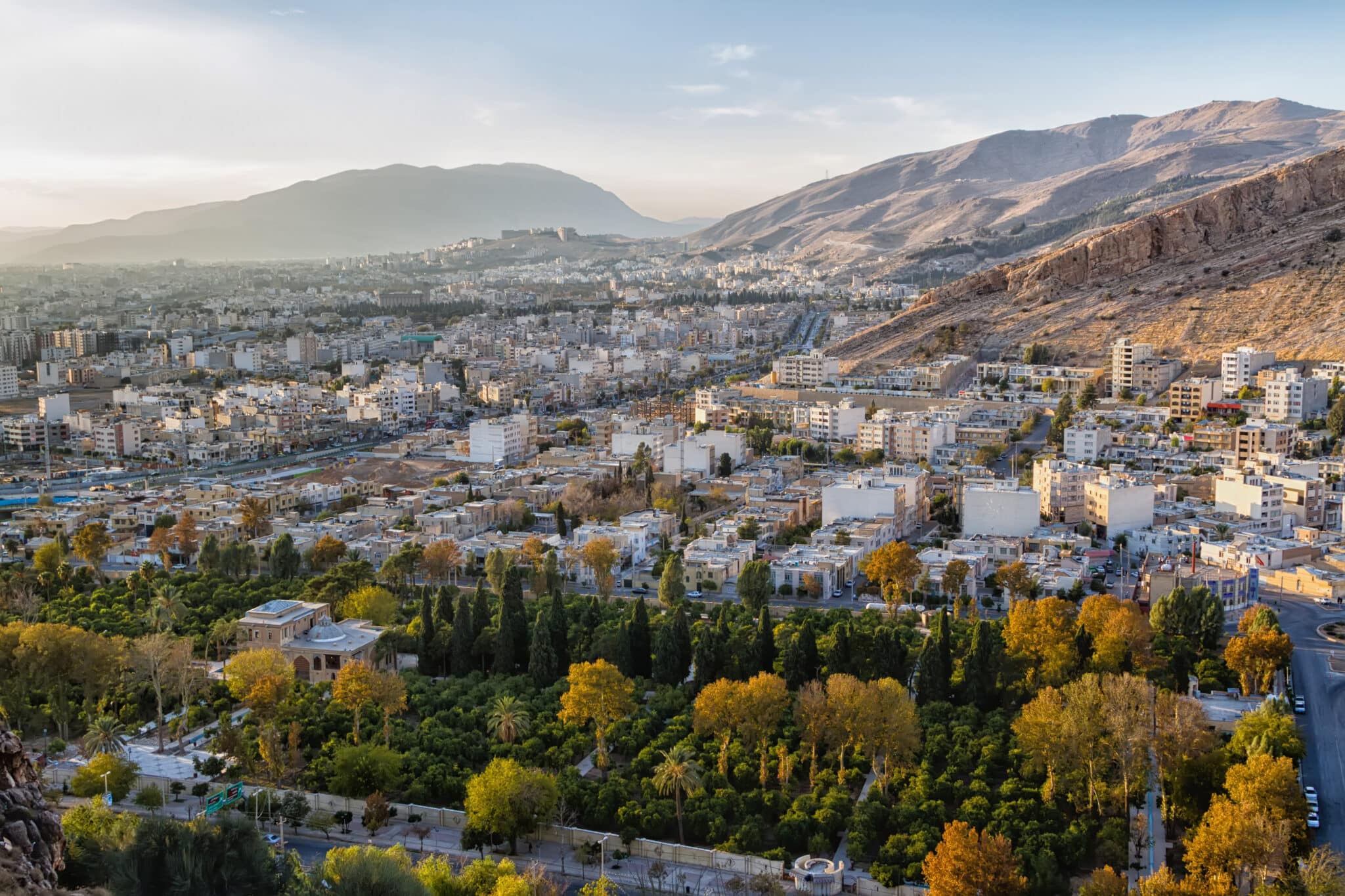
The believers in those Tehran living rooms, as well as in Rasht and Isfahan and Shiraz, are the pastors, evangelists, and leaders who will step into the open when the doors swing open wide. That moment may be closer than it looks.
Pray for the Iranian church. Join millions around the world and pray for the regime to fall and the country doors to open. Pray for Elaheh’s family, her mother whose heart is open, her father who is still searching, and her brother living under siege. Finally, pray for Narges, Abbas, and the thousands of others whose names you don’t yet know but who gave their all for the Gospel.
Today, we pray that when Iran’s doors finally open, the global church will be found already standing right in front of it, having believed, having prayed, and having refused to look away.
Our stories have always been woven together. They still are.