Shavuot and Pentecost are deeply connected biblical celebrations. So connected, in fact, that they refer to the same feast on the Jewish calendar. Yet today, Jews and Christians remember the day for very different reasons. So what links the giving of the Torah on Mount Sinai with the outpouring of the Holy Spirit in Acts 2?
What is the Meaning of Shavuot?
Seven weeks after the Feast of Unleavened Bread God commanded His people to celebrate Shavuot – the “Feast of Weeks” (the Hebrew word Shavuot literally means “weeks”). But what is there to celebrate?
The Jewish people believe that it was exactly on the Feast of Weeks when God gave Moses the Torah on Mt. Sinai. In Jewish culture, this day commemorates God giving His commandments to His people.
For 430 years the Israelites lived in bondage and slavery in Egypt. There, they had been surrounded by a pantheistic religion that knew little of and cared little for. At last, God lead the Israelites out of Egypt, which is what the story of Passover is all about.
And then, on Mount Sinai, Moses brings to the people specific instructions on how to love God, worship Him, and walk with Him. Biblical records state that Moses received all this law through personal encounters with God Himself.
What Does Pentecost Mean?
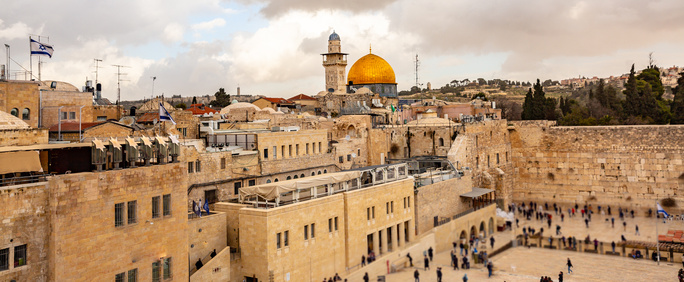
Centuries later, during the Second Temple period, Jewish pilgrims still traveled to Jerusalem to celebrate Shavuot. It was during one of these celebrations that the events of Acts 2 took place.
The Jewish people have been living in their Promised Land for centuries, although not without trouble. But despite wars, division and occupation, there were still many who lived in Jerusalem or pilgrimaged to the Holy City from other parts of the land.
That is the context of what we read about in the beginning of the Book of Acts. It says that the Jewish people gathered in Jerusalem “for the Feast of Pentecost”.
…Pentecost? This must mean that the people were familiar with that name. So, if you pause for a moment, you may start to wonder, is Pentecost… Jewish?
Think about the word itself. What does Pentecost mean? In the Christian world we got so used to it, thanks to the Pentecostal Church, that we probably think it means “something about the Holy Spirit”. Right? Well, not quite.
Pentecost comes from the Greek word for “fiftieth”, referring to the fiftieth day after Passover. And as mentioned previously, 50 days after Passover the Jewish people come to Jerusalem for Shavuot! They celebrate the Feast of Weeks, which was – you guessed it – also called (in Greek) Pentecost!
Shavuot and Pentecost
Considering that Jesus’ disciples were Jewish, it’s not surprising that they observed Biblical holidays. As one of the three biggest Feasts of the Lord, Shavuot called for believers to gather in Jerusalem, like we mentioned above.
In the Book of Acts we read: “When the day of Pentecost arrived, they [disciples] were all together in one place” (Acts 2:1).
On that memorable day, God poured out His Holy Spirit on all those gathered together in Jerusalem. Through this outpouring, He changed history forever. Tongues of fire, rushing wind, speaking in many languages! Now that’s what you call a FEAST!
What many Christians call Pentecost began as the Jewish Feast of Weeks (Shavuot). In Acts 2, the disciples were not creating a new holiday; they were gathered in Jerusalem to observe a biblical feast already commanded in the Torah.
Nevertheless, Christians focus on the events from the Book of Acts, rather than what happened on Mt. Sinai. Let’s take a look at what the followers of Jesus experienced on that day: “Suddenly a sound like the blowing of a violent wind came from heaven and filled the whole house where they were sitting. They saw what seemed to be tongues of fire that separated and came to rest on each of them. All of them were filled with the Holy Spirit and began to speak in other tongues as the Spirit enabled them.” (Acts 2:1-4)
The Parallels between Mount Sinai and Acts 2
There is a purposeful connection between what happened on Mt. Sinai and in Acts 2.
| Mount Sinai | Acts 2 |
| God descends in fire | Tongues of fire appear |
| God gives the Torah | God gives the Holy Spirit |
| A mixed multitude leaves Egypt | Jews from many nations gather |
| God speaks His covenant | Gospel proclaimed in many languages |
Transform lives in Israel through Gospel-centered ministries.
FIRM is your trusted partner for Gospel impact in Israel.
Tongues of fire and 70 languages
The two “miracles” from Acts 2 that we always associate with Pentecost are the tongues of fire resting on the people and the speaking in many languages (or tongues).
Is this the first time that fire has rested on people and other tongues have been spoken?
While the Bible itself does not explicitly mention 70 languages at Mount Sinai, ancient Jewish tradition preserves a fascinating parallel. A Midrash known as Shemot Rabbah describes God’s voice dividing into many languages so that all nations could understand His revelation.
Shemot Rabbah, which is Hebrew for “Great Exodus”, records:
“On the occasion of the giving of the Torah, the Children of Israel not only heard the LORD’s Voice but actually saw the sound waves as they emerged from the LORD’s mouth. They visualized them as a fiery substance. Each commandment that left the LORD’s mouth traveled around the entire camp and then came back to every Jew individually.”
It goes on to record Rabbi Yochanan saying, “God’s voice, as it was uttered, split up into seventy voices, in 70 languages, so that all the nations should understand.” It is worth noting that the number 70 in Scripture is usually associated with “the nations.”
How incredible is it that rabbinic literature records the voice of God appearing like fire and the speaking of 70 languages being present at the first Shavuot?
Is Shavuot the same as Pentecost?
Pentecost, the fiftieth day after Passover, is also the fiftieth day after Jesus’ death and resurrection. Which therefore means, the name itself remains significant for Jews and Christians alike. And we thank God for both events – we are grateful for God’s commandments and we are grateful for His Spirit.
That is why during this season of Shavuot or Pentecost (whichever name you prefer), we encourage you to reflect on God’s Word.
Remember what the Jewish people consider to be the very first Shavuot – when God revealed Himself to the Israelites on Mount Sinai. And then, read about the Shavuot that came centuries later (Acts 2). Meditate on the Spirit of God who equipped 120 disciples of Yeshua to speak the Gospel to the nations of the earth.
The apostle Peter quoted words of the Jewish prophet Joel who literally foretold this happening:
“It shall come to pass in the last days, says God, that I will pour out of My Spirit on all flesh; Your sons and your daughters shall prophesy, your young men shall see visions, your old men shall dream dreams” (Joel 2:28; Acts 2:17).
Shavuot reminds us that God revealed His Word at Mount Sinai. Pentecost reminds us that He poured out His Spirit in Jerusalem. Together, these two moments reveal a beautiful biblical pattern: God not only speaks to His people but He empowers them to carry His message to the nations.
Whether you call it Shavuot or Pentecost, this season invites us to celebrate both the faithfulness of God and the power of His Spirit.
Happy Shavuot!
A Simple Guide Through the Biblical Holidays: Free PDF Download
You may know them as the “Jewish holidays,” but did you know the Bible calls them “Feasts of the LORD”?
We’ve put this guide together for you so that you have all you need to know about these holidays that God calls His own.
Articles Related to Shavuot
- Feasts of the Lord: Biblical Holidays & the Hebrew Calendar
- Hebrew Words and Meanings – What You Should Know
- What is Counting the Omer and Is It Biblical?
- Ethiopian Jews in Israel Today
- On the Biblical Hebrew Alphabet and the Hebrew Language
Estimated reading time: 7 minutes